Artificial Intelligence in the Post-Davos 2026 Landscape

Synopsis
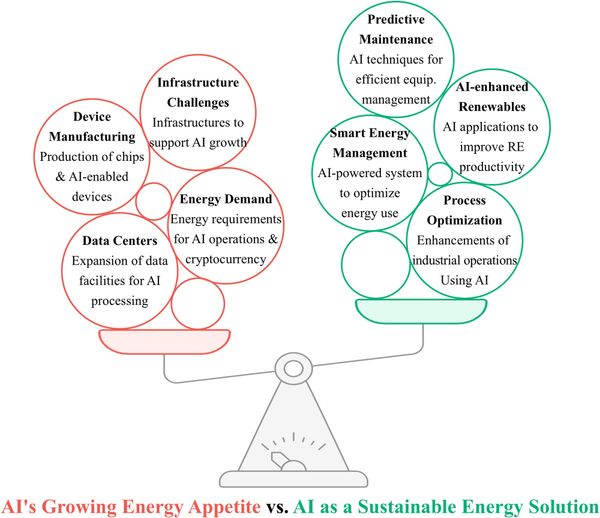
This publication analyzes how artificial intelligence is turning into a massive infrastructure race revamping energy systems, land use, water demand, environmental risk, and global governance. It explains how the rise of AI data centres has pulled utilities, governments, nuclear power providers, semiconductor supply chains, and local communities into the center of AI’s future, making physical resources just as important as the algorithms. The post also explores the growing tensions between AI’s promised economic and social benefits and its real-world costs, including electricity consumption, wastewater pollution, chemical risks such as N-nitroso compounds, and the return of nuclear power as an option for powering hyperscale computing.
In the picturesque town of Davos, Switzerland, global leaders, corporate executives, venture capitalists, hedge fund managers, and academics from the areas of business, technology, and policy convene each January for the World Economic Forum, where they shape agendas at the global, regional, and industry levels.
The Forum positions the annual meeting as a five-day platform for dialogue and collaboration, rather than a formal policymaking body.
Therefore illuminating areas where capital and political will are beginning to align.
This year, that alignment once again centered on artificial intelligence.
What distinguished Davos 2026 however was a transition in focus.
Among many of the most eminent builders and financiers of AI, discussion strayed from model benchmarks and new capabilities, and instead towards the greater question of deployment: whether grids, data centers, semiconductor supply, institutional preparedness and governance structures can scale rapidly enough to support all the systems being built.
The top industry leaders exemplified this turn.
The CEO of Microsoft Satya Nadella emphasized AI diffusion, grid and data-centre capacity, and the institutional alterations required for large-scale deployment.
Nvidia CEO Jensen Huang described AI less as a single technology than as a layered infrastructure system, extending from energy and semiconductors to cloud platforms, models, and applications.
Demis Hassabis of Google DeepMind and Dario Amodei of Anthropic, by contrast, concentrated more directly on the trajectory of advanced AI itself: AGI timelines, safety, controllability, governance, and the broader social consequences of systems whose capabilities may eventually exceed present-day assumptions.
The Shift to Infrastructure
When AI was primarily a research problem, the relevant actors were labs, universities, and a handful of well-capitalised startups.
As soon as it became an infrastructure problem, the cast of important players expanded substantially.
Today, utilities, sovereign wealth funds, semiconductor foundries, and anyone who controls land, water rights, or permitting authority are now just as central to AI’s trajectory as the engineers writing the code — or, more accurately, refining most of the code that AI itself now outputs.
To make this shift happen, the biggest tech companies have poured unprecedented money and strategic effort into owning and controlling the physical territory AI needs to run.
Amazon, Microsoft, Google, and Meta (along with players like Oracle) are some of those aggressively driving the change.
In 2026 alone, these hyperscalers are projected to spend close to $700 billion on data centre projects and related infrastructure — a staggering jump from previous years.
It's not only a matter of renting more cloud capacity or buying more chips anymore.
They’re signing massive power purchase agreements with utilities, restarting nuclear plants, investing in small modular reactors, and building out their own dedicated energy sources.
Microsoft, for example, struck a landmark deal to restart the Three Mile Island nuclear plant (now called the Crane Clean Energy Center) specifically to power its AI data centres.
Amazon has locked in multi-gigawatt nuclear deals in Pennsylvania, Google is expanding geothermal capacity in Nevada, and Meta is building enormous new campuses (like its $10 billion Hyperion site in Louisiana) that come with direct nuclear power arrangements (we'll talk more about these in the next sections).
These companies are competing proactively for strategic land, negotiating directly with state governments for faster permitting, partnering with (or sometimes bypassing) traditional utilities, and even backing private equity deals to acquire or upgrade entire power assets.
Historical Patterns
Let's go into the telecom and fibre boom of the 1990s, when carriers raced to lay vast fibre-optic networks along highways, rail corridors, and undersea routes in anticipation of the internet economy.
Many were correct that digital traffic would eventually explode, however many were wrong about how quickly that demand would materialize and how much pricing power the builders would retain.
The result was a historic glut of unused “dark fibre”: cables already buried in the ground but not yet “lit” for active data transmission.
A 2004 Wired report described the bandwidth surplus after the dot-com bust, noting that only a fraction of fibre capacity was being used and that long-haul network prices had collapsed under the pressure of overbuilding, technological improvement, and telecom bankruptcies.
This same oversupply is happening today with AI data centers.
Many projects are either being delayed or cancelled.
Projects are however not being cancelled because AI infrastructure is irrelevant (do keep in mind the AI winters decades back).
It instead comes down to a few things.
Land can be optioned quickly, GPUs ordered aggressively, and press releases can effortlessly announce gigawatts of capacity — yet grids, substations, water systems, permits, transmission lines, and community agreement all move on a much slower timeline than the AI investment cycle itself.
Overreaching Value Distribution
At Davos, Most optimistic growth projections were accompanied by this: productivity gains from AI are not only a bonus, but a requirement.
The emerging consensus was not just that AI can generate a tremendous surplus in economic value, but that it must do so in ways that are measurable, and broadly distributed.
Otherwise, the industry risks losing the societal mandate to continue scaling.
Satya Nadella articulated this most directly, nonetheless the concern was broadly raised: if the benefits of AI accrue primarily to technology firms while the costs like energy consumption, environmental strain, and labor displacement — are externalized across communities and public systems, political but mostly public tolerance for continued expansion will continue to erode to even greater levels.
Below is a piece of the discussion on AI diffusion, with the CEO of BlackRock Larry Fink asking Satya Nadella.
“Can you describe how this process of diffusion across economies, across companies, across people, and countries? How does that play out?”
“The zeitgeist is a little bit about the admiration for AI in its abstract form or as technology. But I think we, as a global community, have to get to a point where we are using it to do something that changes the outcomes of people and communities and countries and industries,” Nadella said. “Otherwise, I don’t think this makes much sense, right? In fact, I would say we will quickly lose even the social permission to actually take something like energy, which is a scarce resource, and use it to generate these tokens, if these tokens are not improving health outcomes, education outcomes, public sector efficiency, private sector competitiveness across all sectors, small and large. And that, to me, is ultimately the goal.” — Satya Nadella
Nadella continues on with explaining that process.
The latter however, are very real costs with growing AI use, and the leaders in Davos were, to their credit, not pretending otherwise.
By now the resource consumption has moved well beyond an environmental footnote.
According to the International Energy Agency (IEA), global electricity demand from data centres is projected to more than double later this decade, reaching approximately 945 terawatt-hours — slightly more than Japan's entire current annual electricity consumption.
In advanced economies specifically, data centres are projected to account for more than 20% of all electricity demand growth by 2030.
Beyond electricity, the water demands of data centre cooling introduce a compounding pressure, driven by the substantial thermal output of high-performance AI processors, which include central and tensor processing units.
This is particularly acute in regions already navigating freshwater scarcity.
AI data centres reportedly use more water in a year now than the amount of bottled water people drink globally annually.
While some estimates suggest that data centre water consumption may rival or exceed major categories of global water use, such comparisons should also be treated with scepticism.
Reliable quantification remains difficult, as many technology companies do not publicly disclose detailed water usage specific to their AI operations.
But for instance, a typical conversation with an LLM like ChatGPT (10-50 queries) can use up to 50 millilitres of fresh water, roughly one water bottle.
One can then only imagine how many millions upon millions of gallons of water are used by the day.
Then with new data centre projects being announced every week (the US alone has over 4000 AI data centres and counting), and then with many hundreds of data centres under construction around the world momentarily, one can conceive the detrimental statistics underway for 2030.
the environmental costs of data-centre growth not only relates to water consumption, but pollution in water systems as well, especially where wastewater handling is poorly controlled.
Nitrogen compounds such as nitrates are highly soluble and can move readily through local water supplies, farmland and groundwater.
Nitrates however are not inherently harmful in every context, as they occur naturally in soil and vegetables, and can support nitric-oxide production in the body.
High concentrations in contaminated water though raise a different set of concerns.
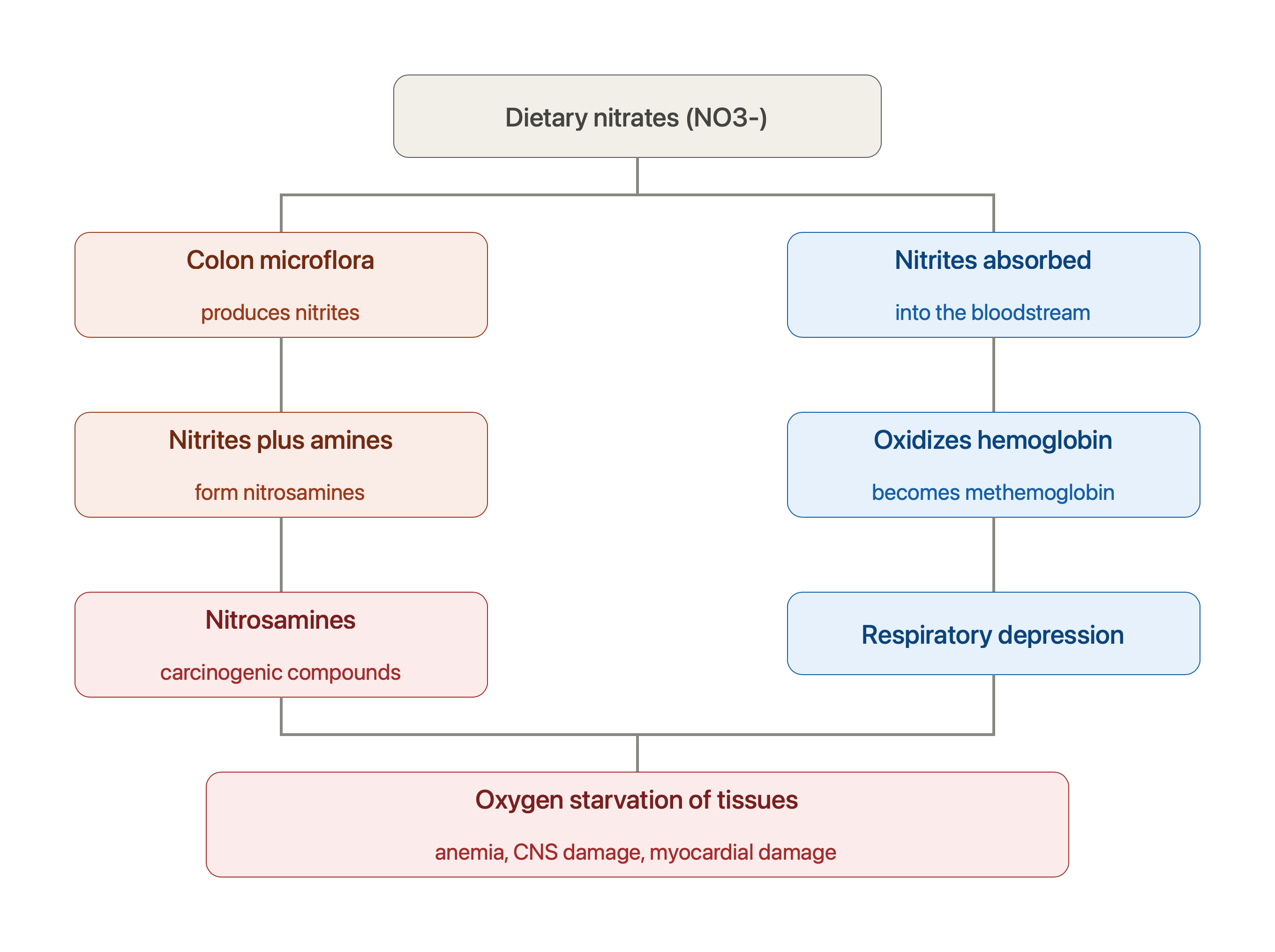
Under certain conditions in the body, they contribute to the formation of carcinogenic and teratogenic N-nitroso compounds (the larger chemical group, nitrosamines are one type within that group), where their spread through wastewater can inflict broader risks on both public health and agricultural ecosystems.
More extensively, the chemical implication associated with large cooling systems is not limited to nitrates.
Depending on the design of the facility and its water-treatment systems, cooling operations can also involve biocides, PFAS, heavy metals, corrosion inhibitors, antiscalants, antifouling agents, and glycols used in heat-transfer and freeze-protection systems.
Some of these substances are necessary for operational reliability, but if discharge, blowdown, leakage, or wastewater handling are poorly managed, they can introduce many more risks.
You cannot build megastructures of this scale and simultaneously argue that their environmental and social footprint is a secondary concern.
The leaders who understood this at Davos were the ones at least making the more credible case — insisting that the benefits must grow large and diffuse enough to justify them.
However, the notion of minimizing these costs close to zero through better and more innovative AI architectures as well as cleaner data centre optimization systems remains a fascinating and imperative area of exploration that must be deciphered in rapid time.
There already exists a plethora of things that degrade the environment.
Projections for the future are looking dimmer as each year passes.
It is our moral obligation to stand in solidarity and safeguard our world substantially more, as technology accelerates and we reach even greater heights of interconnectedness.
Now with AI expansion, our actions now will matter most, indeed more than any other period in history.
There are eras defined by discovery, and others defined by consequence, ours will be defined by both.
"We have a single mission: to protect and hand on the planet to the next generation." — Francois Hollande, former President of France, Davos 2015
Energy Limits and the Return of Nuclear Power
The energy problem at Davos 2026 also surfaced a conversation that would have seemed fringe even just a few years ago: nuclear power, and the uranium supply chains that feed it.
A dedicated nuclear session drew government representatives from the United States, Czech Republic, India, and the United Kingdom, with the consensus framing a departure from the renewable-first orthodoxy that has dominated energy policy discourse for a decade — nuclear as the only dispatchable, low-emissions baseload capable of meeting AI's compounding, around-the-clock power demands.
The corporate sector had already begun acting on that conclusion well before the forum convened.
Microsoft's twenty-year power purchase agreement for the restarted Three Mile Island reactor in Middletown, Pennsylvania (site of the worst commercial nuclear accident in US history) — capable of powering between fifteen and twenty hyperscale data centres at full consumption, had already set the basis, with Meta at the same time announcing the expansion of three nuclear facilities and the reopening of an Illinois reactor.
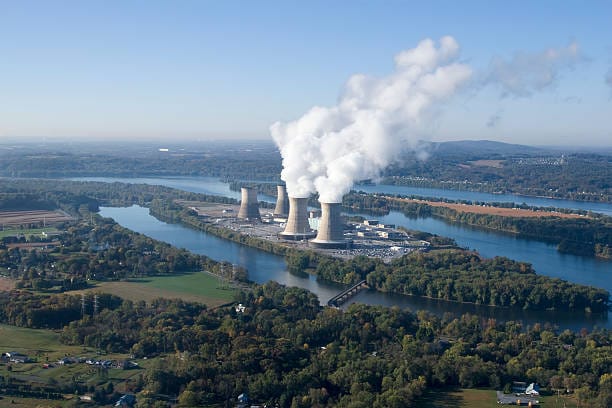
At Davos, uranium developers were making the argument: if technology firms intend to anchor the AI build-out in nuclear power, they may eventually need to move upstream and help secure uranium supply in the same way automakers once moved to secure battery minerals before the EV boom.
The implication is that data-centre investment is now a question of fuel security as well.
The AI infrastructure race has the potential to become a uranium story, and the companies that recognize that earliest will have secured a supply-chain advantage that no amount of software optimization can replicate.
Electrical power, Elon Musk argued, is the single binding limit on AI deployment in the United States.
Very soon, the industry will be producing more chips than it can physically turn on.
His pointed comparison was China, which is deploying over 100 gigawatts of solar capacity per year — building the energy foundation for AI infrastructure at a pace that US tariff policy and grid inertia are currently making difficult to complement.
Technological and Societal Integration
Alongside infrastructure and energy, a third limitation is becoming increasingly visible: governance.
The EU's AI Act moves from partial to broad applicability on August 1, 2026 — less than seven months out.
Frontier labs are now operating inside a compression cycle: capabilities in coding, reasoning, and autonomous action are improving faster than institutions can adapt, but regulatory obligations are arriving on fixed deadlines regardless of readiness.
Hassabis and Amodei both alluded to this dynamic, albeit in different ways — capability acceleration shortens the window for societal adjustment, but slowing down isn't an option when competitive dynamics and geopolitical pressure are both pushing the other direction.
Especially in the AI age, safety and governance are no longer abstract principles you address after the technology matures, but they're constraints you navigate while the technology is still moving.
Otherwise disasters of immense proportions will unfold ubiquitously.
Geopolitical pressure is the hardest but most important part.
If one country slows down while another accelerates, restraint becomes strategically infeasible.
Societies need international coordination around minimum safety standards, shared evaluations, compute transparency, structured model incident reporting, and clear restrictions on the most dangerous uses.
This global cooperation has been done with nuclear weapons and with averting the further critical depletion of the ozone layer.
History shows that it is more than possible.
“The Montreal Protocol is a powerful example of multilateralism in action. With the many problems facing the world – from conflicts to growing poverty, deepening inequality and climate emergency – it is a reminder that we can succeed in working together for the common good,” said the UN chief.
Conclusion
Davos 2026 evidently didn't provide definitive solutions to these issues. Artificial intelligence is entering a phase where its trajectory will be determined not just by algorithmic breakthroughs, but instead by infrastructure capacity, energy availability, and societal acceptance. Competition is like never before and the resource requirements are intensifying.
The urgency of these challenges demands immediate and sustained engagement, as the trajectory of increasingly powerful AI systems and societal integration hinges on our collective capacity to respond effectively.
"How did you do it? How did you evolve, how did you survive this technological adolescence without destroying yourself?" — Dario Amodei on his essay, "The Adolescence of Technology, citing a scene from Carl Sagan’s Contact, in which a representative asks alien visitors.
As someone enthralled by the realms of ML and global politics, it is increasingly clear that we are advancing far into uncharted territory, different from anything else in history. Alongside the shift in focus towards AI infrastructure, more powerful AI systems are also on the horizon, and increasingly so without someone in the loop.
The World Economic Forum’s 2025 report says employers expect large job disruption this decade from technology shifts. Being largely due to AI (but not all); Amazon's layoffs of 16,000 employees, the Blocks 40% reduction in its workforce, and also Oracles elimination of 30,000 employees, is all the start. A moment may arrive during this 5th Industrial Revolution — suddenly and without warning (which do happen in AI research labs), when a breakthrough emerges that reshapes the structure of almost everyones daily life itself, for better or for worse.
History has shown how rapidly the world can transform, as it did during the onset of COVID-19; the trajectory of AI holds the potential for change of equal, if not greater, magnitude. The imperative, then, is preparedness, coming from knowledge which creates the possibilities that make foresight and execution conceivable.
While I do not claim to possess all the answers, I know enough of human nature to recognize that our response to such moments will matter as much, if not more, than the technology that precipitates it.
Through artificial intelligence, humanity will attain a velocity once reserved for gods, perhaps without first acquiring the discipline necessary to wield it.